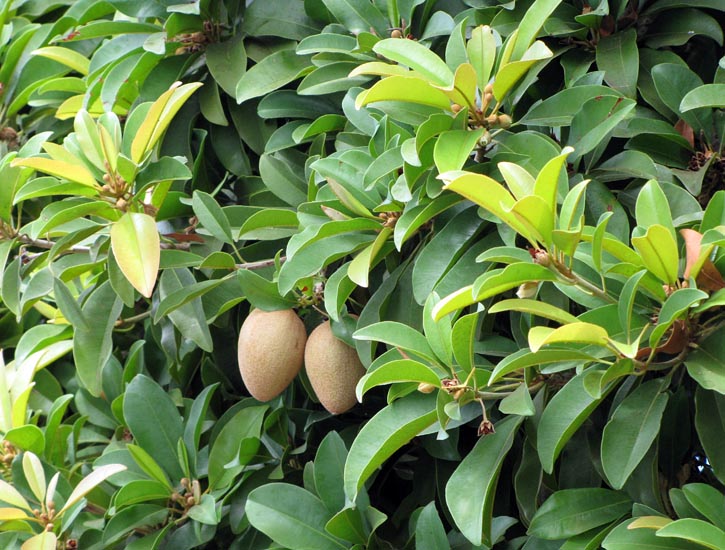
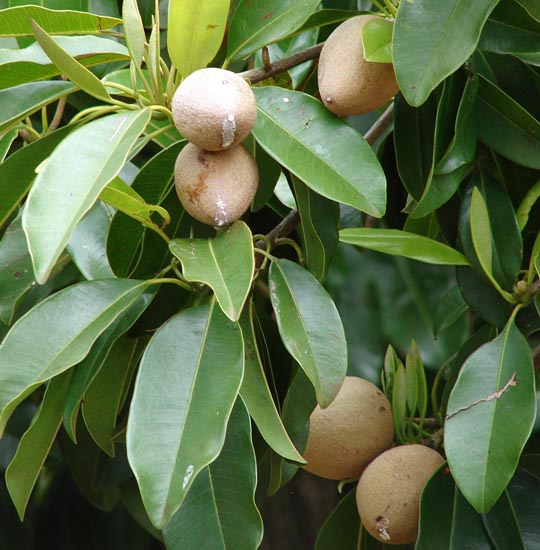
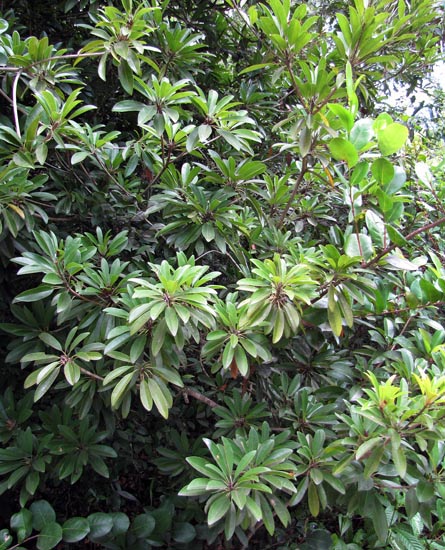
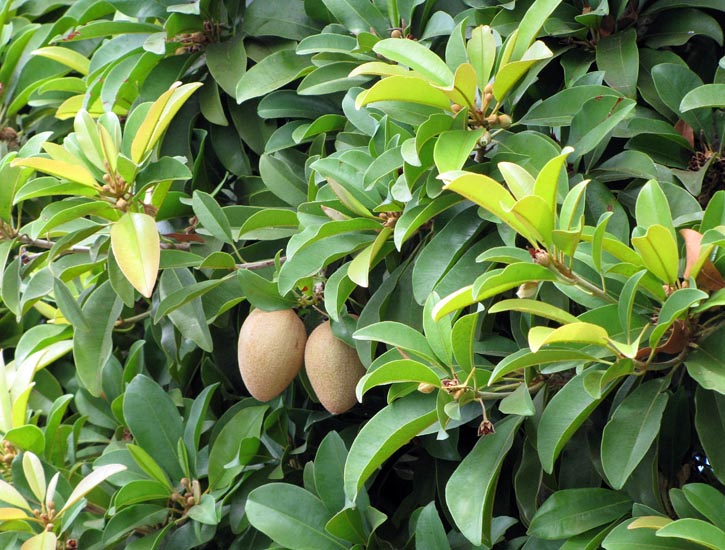
Manilkara Zapota plant in Lautoka City’s Botanical Garden is commonly known as sapodilla (chikku in Hindi) is an evergreen tree native to southern Mexico. It belongs to the family Sapotaceae and kingdom to plantae. The fruit has an exceptionally sweet, malty flavor. The tree can survive only in warm, typically tropical environment.
The Sapodilla tree, known for its remarkable longevity, can thrive for up to one hundred years. Reaching heights of over 30 meters (98 feet) with a trunk diameter of 1.5 meters (5 feet), this majestic tree is a testament to nature’s grandeur. In cultivated settings, the average height ranges from 9 to 15 meters (30 to 49 feet), with a trunk diameter not exceeding 50 centimeters (20 inches).
Durable and Resilient: The Sapodilla tree exhibits remarkable wind resistance, and its bark is a source of a white, gummy latex known as chicle. The ornamental leaves, glossy and medium green, are elliptic to ovate, measuring 7–15 centimeters (3–6 inches) in length, with an entire margin.
Inconspicuous Beauty: The tree’s white, bell-like flowers with a six-lobed corolla are inconspicuous yet add to its understated beauty. An unripe fruit, with a firm outer skin, releases white chicle when picked. In contrast, a fully ripened fruit has saggy skin and retains the chicle.
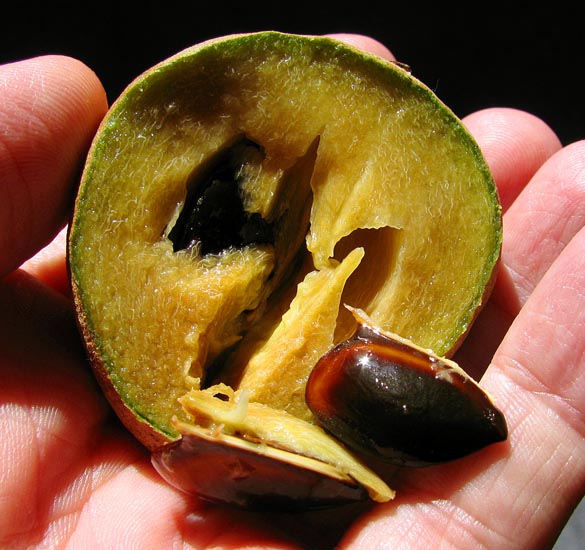
Large, Delectable Fruit: The Sapodilla’s fruit is a sizable berry, ranging from 4 to 8 centimeters (2–3 inches) in diameter. Inside, its flesh exhibits hues from pale yellow to earthy brown, with a grainy texture reminiscent of a well-ripened pear. Each fruit houses one to six glossy, black seeds resembling beans.
Exquisite Flavor and Characteristics: Known for its exceptionally sweet, malty flavor, the unripe fruit is firm and contains saponin, exhibiting astringent properties akin to tannin. This characteristic can induce dryness in the mouth.
Survivor of Warm Tropical Climes: The Sapodilla tree thrives in warm, tropical environments, displaying low tolerance to drought and heat during its early years. However, it succumbs easily if temperatures drop below freezing. Typically taking five to eight years to bear fruit from germination, these trees yield twice a year, with continuous flowering throughout the year.
The Sapodilla tree is a true marvel, showcasing nature’s resilience and providing a bounty of delectable, sweet fruits.
A Richly Flavoured Delight; The Black Mulberry, scientifically known as Morus nigra, is a deciduous tree that graces landscapes with its impressive stature, reaching up to 12 meters in height and 15 meters in breadth. The leaves, measuring 10–20 centimeters in length and 6–10 centimeters in breadth, add to the tree’s beauty with their downy undersides and rough upper surfaces adorned with short, stiff hairs. Notably, each cell boasts a total of 308 chromosomes, reflecting tetratetracontaploidy (44x), showcasing its unique genetic composition.
The fruit of the Black Mulberry is a compound cluster of small, dark purple drupes, nearly black when ripe, with a diameter of 2.5 centimeters. Renowned for its rich flavor, reminiscent of the red mulberry, this species stands out among its counterparts. Anthocyanins contribute to the distinct coloration of the mulberry fruit.
Cultivation and Geographic Spread
Believed to originate from mountainous regions of Mesopotamia and Persia, Black Mulberries have made their way west across Europe and east into China. Thriving in areas including Armenia, Afghanistan, Iraq, Iran, India, Pakistan, Syria, Lebanon, Jordan, Palestine, Israel, and Turkey, these trees have become a significant part of various cultures.
The fruit is not only edible but has been cultivated extensively for its delectable properties. In regions like Persia, it is known as “toot” or “shahtoot” (king’s mulberry), and in Arabic, it is referred to as “shajarat tukki.” Locally concentrated in Pukanec, Slovakia, where 470 black mulberry trees adorn vineyards, Europe has witnessed the successful integration of this species into its landscape.
Historical Impact and Legacy
In the 17th century, efforts were made to import Black Mulberries into Britain with the hope of supporting silkworm cultivation (Bombyx mori). While unsuccessful in that particular endeavor due to silkworms’ preference for white mulberries, the trees left a lasting legacy in the country’s gardens. Widely used in folk medicine, especially for treating ringworm, Black Mulberry holds cultural significance and continues to enchant with its unique characteristics.

 169 Vitogo Prade Lautoka, Fiji
 info@lautokacitycouncil.com.fj